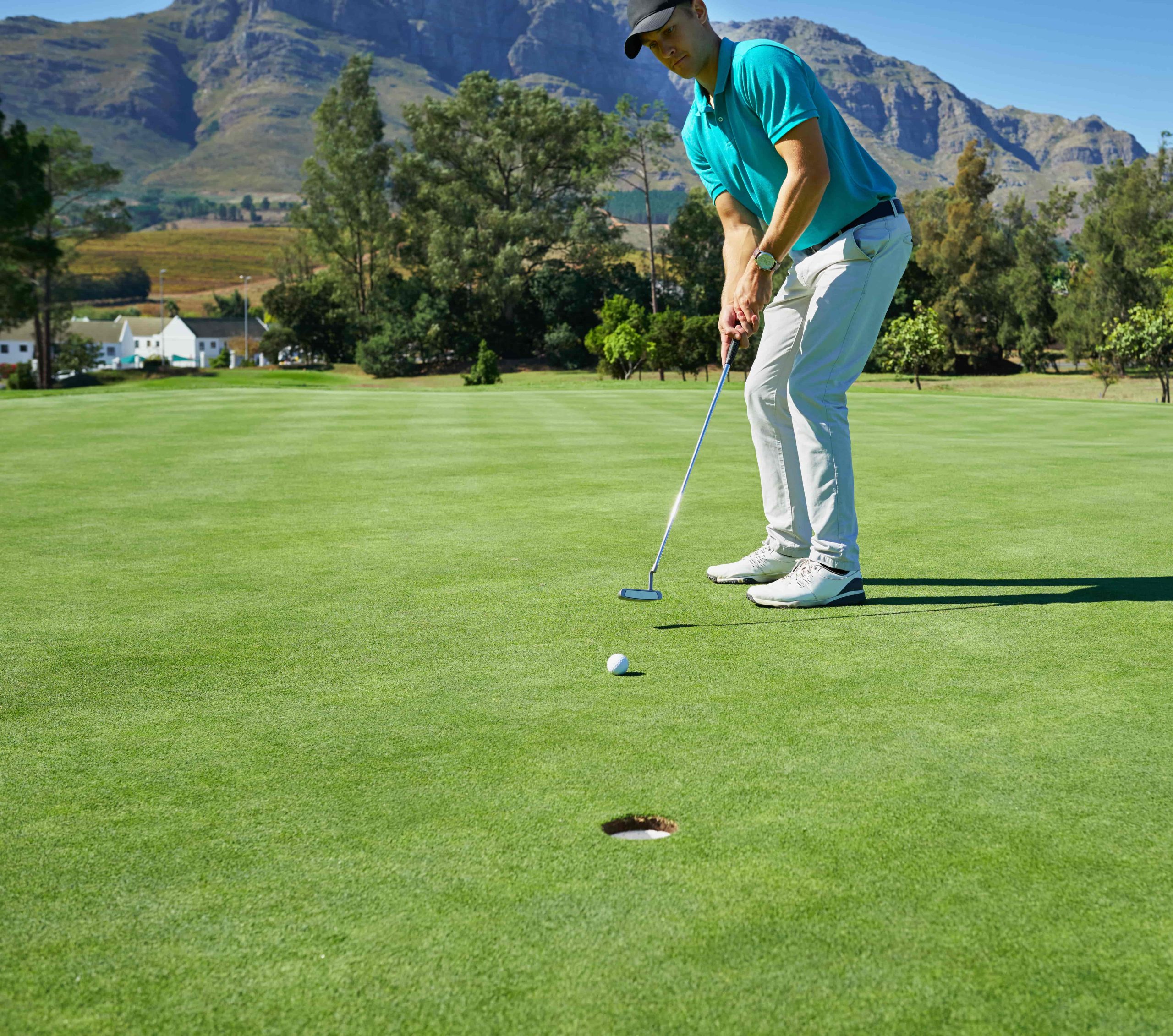
Distance control is the most important skill in putting. Even professional golfers miss more putts because of poor distance than direction. If you can consistently control speed, you will 3-putt less and score lower immediately.
Good distance control is not about power—it’s about rhythm, feel, and repeatable motion.
Below are the most effective techniques to improve your putting distance control.
1. Focus on Tempo, Not Force
The biggest mistake golfers make is “hitting” the putt instead of swinging it smoothly.
Key idea:
- Your backswing and follow-through should match in rhythm
- Acceleration should feel smooth, not sudden
Why it works:
A consistent tempo helps you repeat distance more reliably on every green speed.
2. Use the “Clock Face” Method
Imagine your putting stroke like a clock:
- 7 o’clock to 5 o’clock = short putts
- 8 o’clock to 4 o’clock = medium putts
- 9 o’clock to 3 o’clock = long putts
Benefits:
- Creates repeatable swing lengths
- Helps match distance to stroke size
- Reduces guesswork
This is one of the simplest ways to build consistent distance control.
3. Practice the Ladder Drill
The ladder drill is one of the best training methods for distance feel.
How it works:
- Place balls at increasing distances (e.g., 5 ft, 10 ft, 15 ft, 20 ft)
- Try to stop each putt within a 1–2 foot “zone”
What it improves:
- Touch and feel
- Speed adjustment
- Green reading awareness
4. Control Your Backstroke Length
Distance in putting is mainly controlled by backstroke size, not force.
Rule of thumb:
- Short putt = short backstroke
- Long putt = longer backstroke
- Keep acceleration consistent
Why it matters:
Changing force creates inconsistency, while changing stroke length keeps motion stable.
5. Learn Green Speed First
Every green rolls differently depending on:
- Grass type
- Weather
- Moisture level
- Maintenance speed
What to do:
- Practice a few warm-up putts before starting
- Observe how far the ball rolls naturally
- Adjust stroke length accordingly
Pro tip:
Most distance errors happen because golfers don’t adapt to green speed early.
6. Use the “1–2–3 Rule” for Lag Putting
For long putts, focus only on getting close.
Rule:
- 1st goal: get within 3 feet
- 2nd goal: avoid 3-putt
- 3rd goal: control speed, not perfection
Why it works:
It reduces pressure and improves long-distance control naturally.
7. Practice One-Hand Putting
One-handed putting drills improve feel dramatically.
How to do it:
- Practice with your dominant hand only
- Focus on smooth pendulum motion
- Repeat for both short and long putts
Benefits:
- Better touch sensitivity
- More natural stroke
- Improved distance awareness
8. Maintain Consistent Setup
Distance control depends heavily on setup consistency.
Key fundamentals:
- Same stance width every time
- Ball position slightly forward of center
- Eyes over or just inside the ball
- Stable posture
Why it matters:
Inconsistent setup leads to inconsistent swing length and poor speed control.
9. Develop “Feel Practice” Without Targets
Sometimes practice without holes.
Drill idea:
- Putt to different distances without aiming at a hole
- Try to stop the ball at exact distances (10 ft, 20 ft, 30 ft)
Benefits:
- Builds true speed awareness
- Removes pressure of accuracy
- Improves instinctive distance control
10. Read Greens for Speed, Not Just Break
Most players only focus on direction.
What to also check:
- Uphill = slower putt
- Downhill = faster putt
- Grain direction (if visible)
- Moisture and wind
Why it matters:
Speed control is directly affected by slope and surface conditions.
Common Mistakes in Distance Control
Avoid these errors:
- Hitting instead of swinging
- Changing stroke speed randomly
- Ignoring green speed differences
- Overthinking short putts
- Inconsistent setup posture
Final Thoughts
Distance control in putting is not about strength—it is about repeatable rhythm, consistent stroke length, and good feel for green speed.
Simple breakdown:
- Tempo = consistency
- Stroke length = distance control
- Practice drills = feel improvement
- Green reading = smart adjustments
In simple terms:
Great putting is not about making every long putt—it’s about leaving every putt close enough to avoid mistakes, and that starts with mastering distance control.